
My Least Failed Product
Last updated
Table of Contents
At work we have a chat for people who are enthusiastic about artificial intelligence. My colleagues sometimes share phone apps and other products they have vibe-coded in their spare time.
Some of the ideas are quite good. One colleague built a Shopify integration that created some sort of declarations or tax documents. I do not remember exactly. Another made an app that asks people how happy they are, then marks the happiest cities on a map. Someone else made an iPhone app that copies text straight from the camera, and also made pets for the Apple Watch.
Seeing people around me build things like this brought me back to a thought of my own: I want to make a useful hobby app that at least one person will pay $1 a month for.
I am not very good at product thinking. Most of my ideas are some kind of madness that nobody would ever use, and I usually work this out after thinking about them for three hours or three days.
So here is my least failed attempt at making a product.
“Least failed” is a strange term. Of course the attempt failed. It just travelled farther through my pipeline of failures than the others.
Making YEETer
I decided to make an app that would help people sell ordinary household items on Trade Me (a New Zealand online marketplace), using artificial intelligence.
I was pretty excited about OpenAI's new GPT Image 2, released on 21 April 2026, and wanted to give it a real task instead of another demo.
The user would photograph an object and receive a draft listing: everything from the title to a suggested price. I wanted to automate as much as possible.
Before I started building, I asked both ChatGPT Pro and ChatGPT Deep Research whether the product could be viable, what analogues existed around the world, and whether somebody had already made the same thing in New Zealand.
It found apps doing versions of this for eBay, Etsy, Amazon, and other marketplaces, in all sorts of flavours. But it found nothing like it for Trade Me. That gave me enough confidence to start building.
First I created several Trade Me listings entirely by hand to count how many actions the process required. The Trade Me app already handled some of them, but AI image processing and each person's saved preferences could automate plenty of the remaining actions.
I took screenshots of every action in the Trade Me app and asked ChatGPT Images to draw mockups for my app. I told it that the app would have access to an image model, which would fill in item details from the photo, and to saved user preferences such as “always pickup” and “always auction.”
After the first prompt, I had an almost usable set of screens.
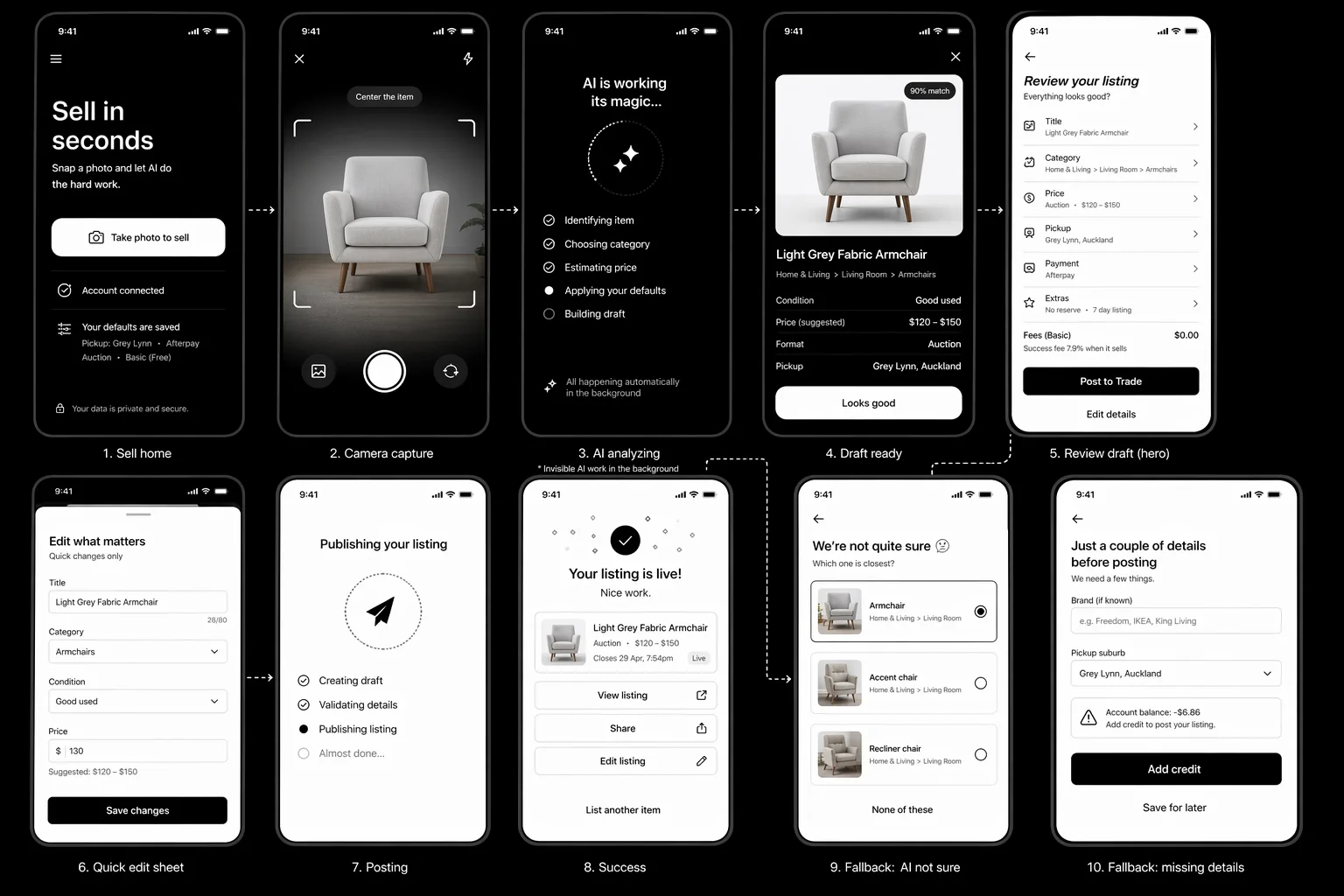
Long story short, I saved the images to my computer and told Codex to make the app.
I connected the phone to the computer with a cable so Codex could see its screen through screenshots and correct itself. Codex installed an Android development environment and quickly made the first version.
Codex in April 2026 was not as good as it is now. Looking back from July, I can say exactly what it did worse. Instead of copying the mockups as I had asked, it made a vaguely similar version according to its own preferences. It wrecked the design and added extra UI elements I had never requested.
That pissed me off a little, but I took a breath and went back to ChatGPT Images. I showed it screenshots of the actual app and asked for very precise correction instructions so that Codex could fix its own work.
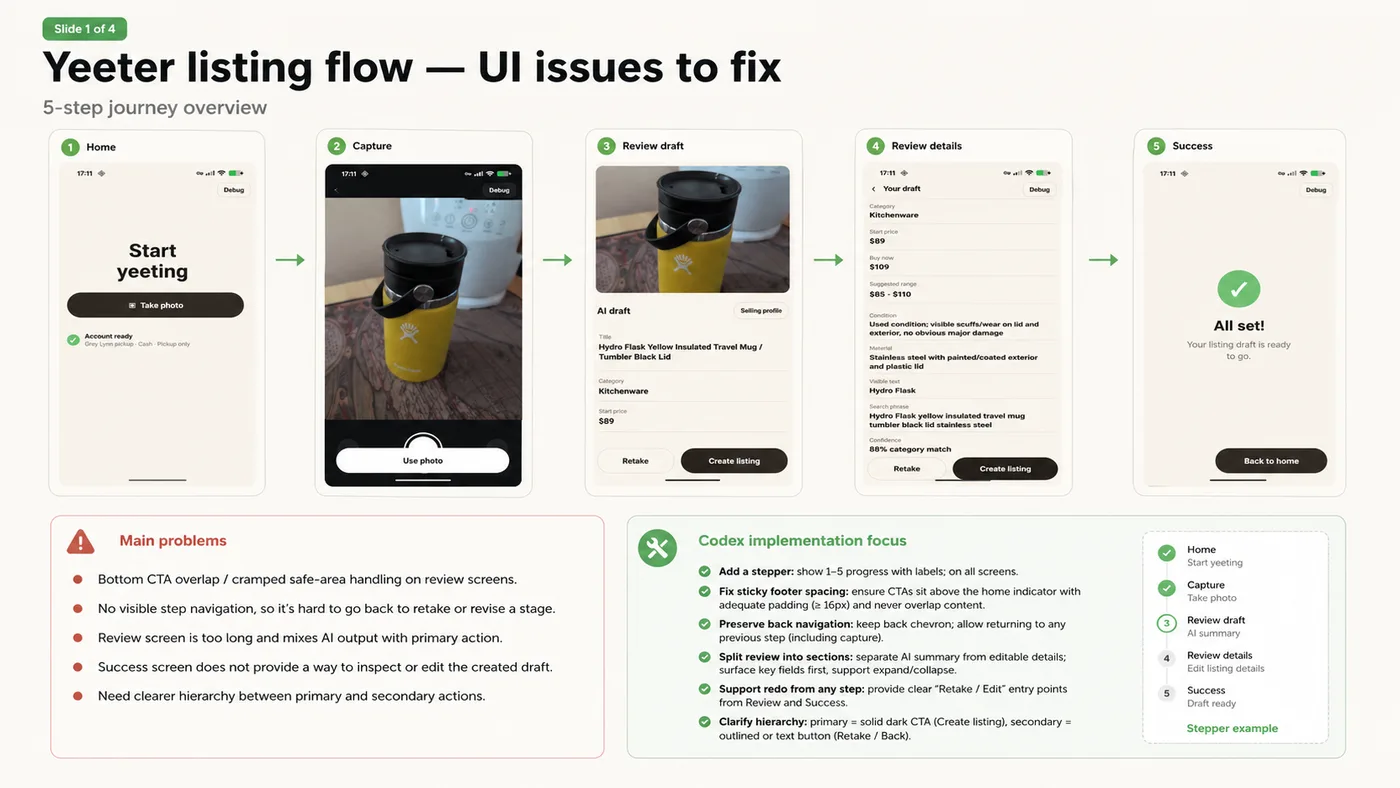
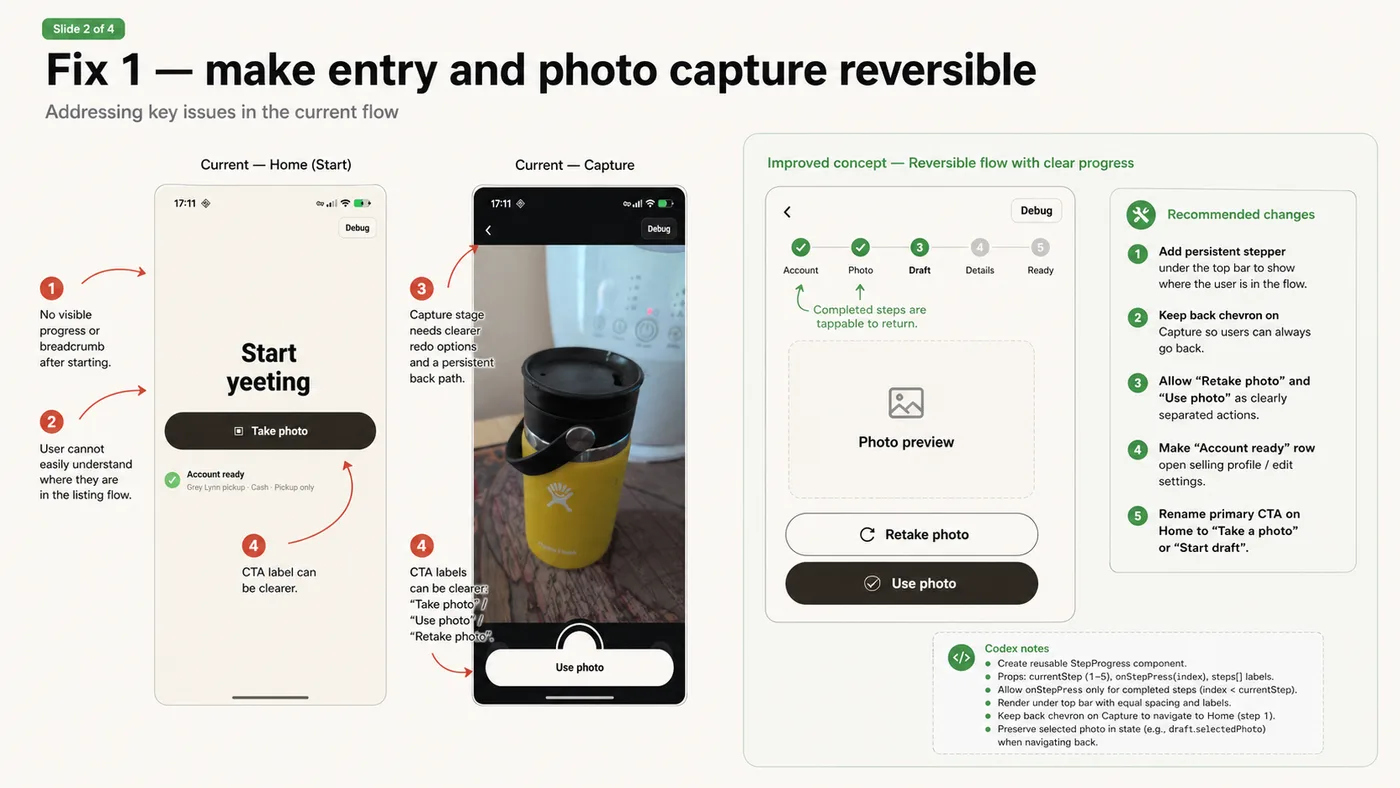
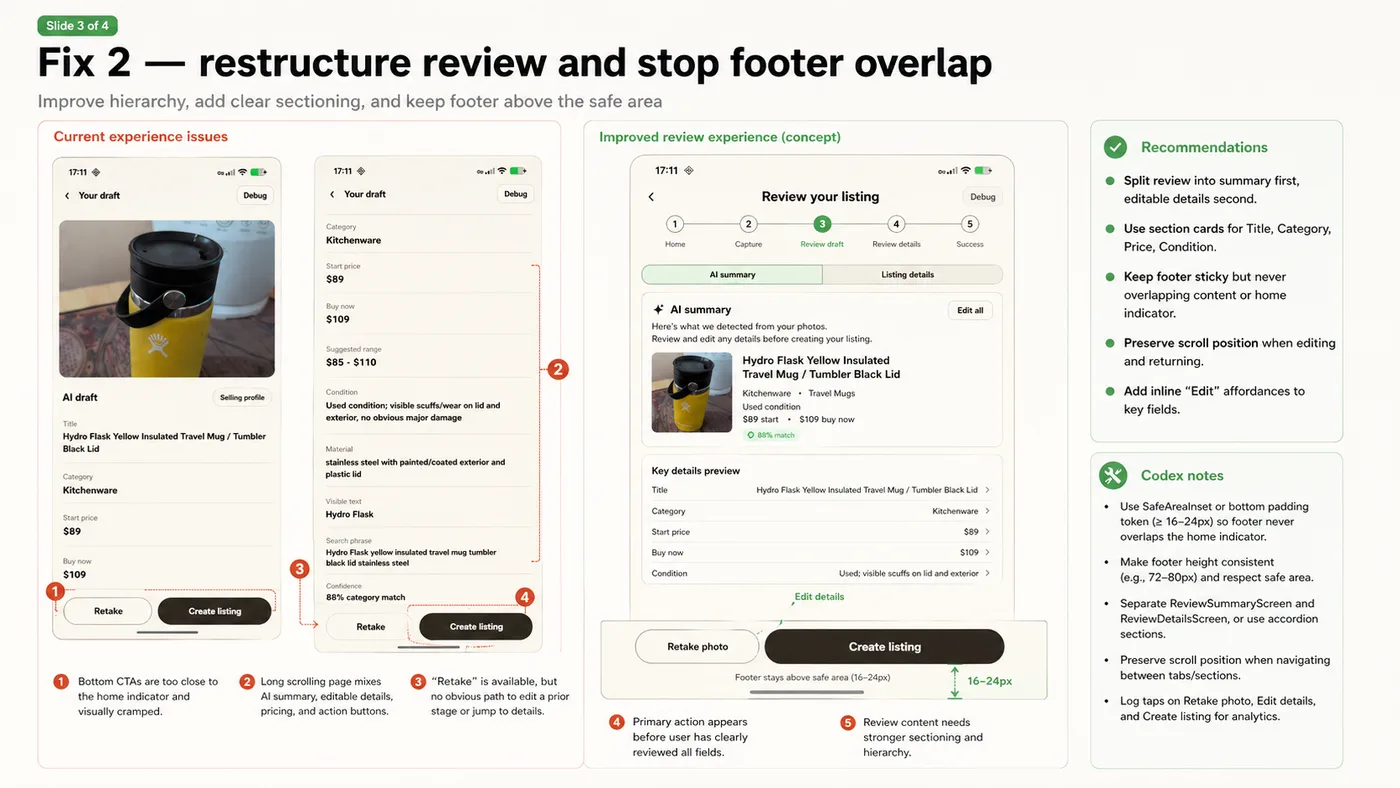
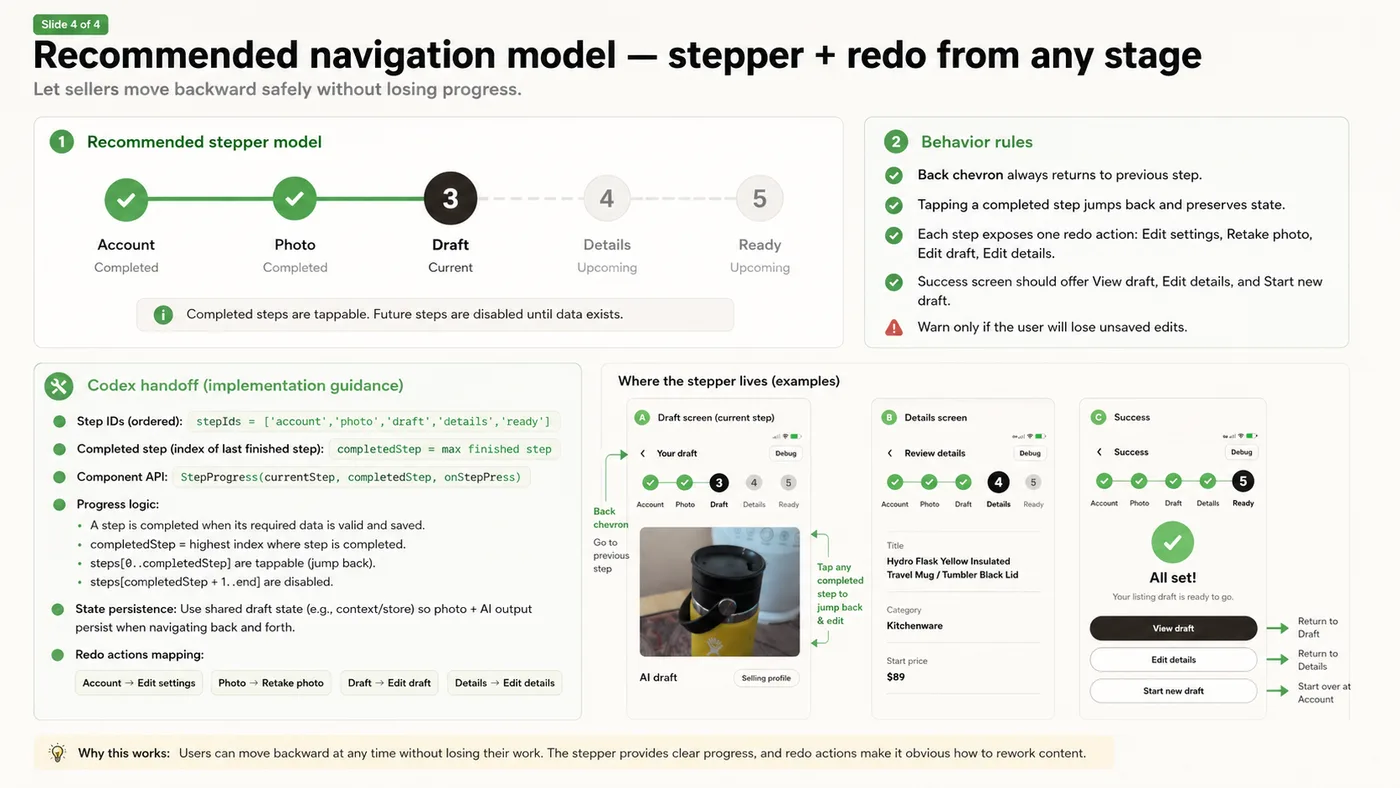
After several iterations like this, ChatGPT finally hammered into Codex how the app was supposed to look, which screens it should make, and which rubbish steps and menus it must never add.
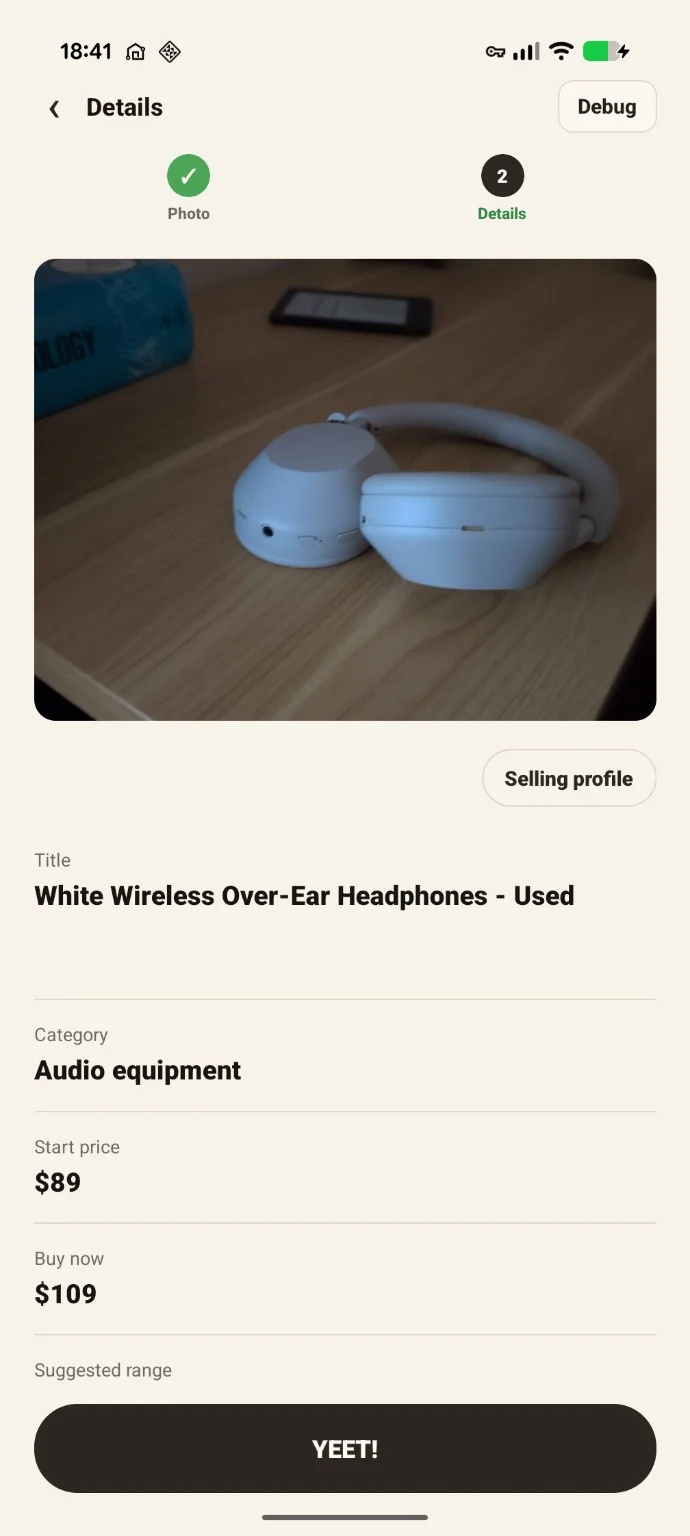
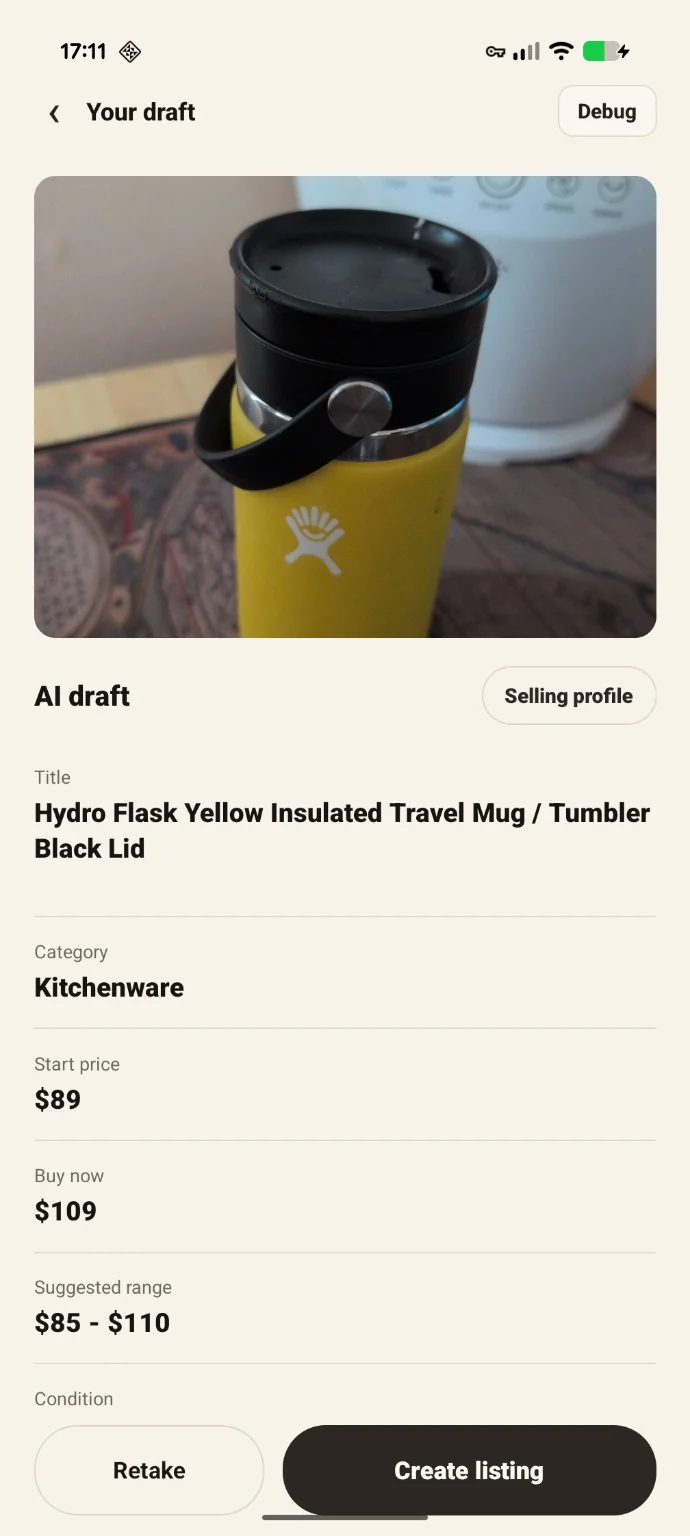
Codex was already very strong at backend development in April 2026, so adding image processing through ChatGPT Images was not a problem. The screenshots below show the idea quite well: the model recognised the items on my desk and filled in the categories. I did not add multi-photo input to the prototype, so it generated each listing from a single image. With several images, it would almost certainly have identified the headset brand as well.
After a couple of evenings, the app was ready. I could have made it much faster, but I made myself rest and let the app sit overnight. Then I could return the next day with a fresh head and see what else needed to be thrown away.
I forgot to explain where the name YEETer came from. On Fridays we stop working at 3 p.m. and start talking about anything at all. Everyone at work knows about my AI psychosis, so when I am involved, “anything at all” usually means artificial intelligence. I showed my teammates the rough version of the app, and one of them suggested the name YEETer.
The slogan was something like: “Not in love with this old vacuum cleaner? YEET it!”
Taking YEETer outside
That weekend I took the half-finished version outside to test it. I no longer remember exactly what happened, but I think I had forgotten to configure the price prompt, so everything I photographed received the same price.
I live in a sketchy area where people leave random shit outside. For once, that was a blessing: YEETer had plenty of test inventory.
Watch the screen recordings and enjoy the things I “listed.” I certainly enjoyed the test run.
Outdoor test recording 1 of 4.
Outdoor test recording 2 of 4.
My favourite: putting an old towel that had already been run over a few times up for sale.
Outdoor test recording 4 of 4. (If you got this far through my recordings, you probably noticed that I am a Clash Royale addict too.)
The end
Before I started any development, I submitted an application to Trade Me to register the app. I read their developer terms and other documents and stayed strictly within what they allowed an app to do.
A couple of weeks later, the application was declined without any explanation.
I cried over the verdict for about half an hour, because by then I had already prepared myself for Trade Me to reject the proposal. Something told me they would want to implement the same functionality themselves without my participation.
Maybe Trade Me will build it themselves one day. At the time of writing, though, they still have nothing like YEETer for ordinary items. As far as I know, their similar system only works for cars. Everything else is still listed the old way.
Three months later
I asked Codex to use my computer to list an item on Trade Me and record the screen while it worked. It got almost everything right on the first attempt, but recorded the wrong screen and did not notice.
It is also hilarious how much damage Codex caused along the way. It overwrote one of the photos in my camera upload folder, then apologised for it (something something AI safety, guardrails, sandboxing, and using AI with care and professionalism).
It also put my home address into the Trade Me listing (something something we must take responsibility for how we use AI or pay the price).
I asked it to edit any private photos and my address out of the recording. It “worked on it” for about ten minutes, then showed me the resulting video: a recording of another screen where nothing at all was happening.
Since the first recording was useless, I asked Codex to do the task again for the video below. This second pass was staged: it recorded the correct screen, started listing the same item again, and stopped at the final step without submitting it because this was only a demo.
This is also a glimpse of what I want to write about next: my experience with AI and what I think about it in general.
But that is a story for another post. See you.